Learn more

Every year, September 17 is dedicated to quality and safety in healthcare. On this date, the entire world celebrates World Patient Safety Day – and HARTMANN is participating again. This year’s motto is “Safe care for every newborn and every child.”
Firstly highlighted by the World Health Organisation (WHO) in 2019, September 17 has since been reserved for a key topic in the healthcare sector: The WHO estimates that every year there are many preventable medical errors that lead to serious consequences for patients. The day of action aims to raise awareness of the need to focus even more on patient safety in the healthcare sector at a global level. There is room for improvement in many areas, such as treatment errors, medication errors and hygiene.
In Germany, Aktionsbündnis Patientensicherheit e. V. (APS) is coordinating the day of action. Pharmacies, care facilities, doctors' surgeries and hospitals organise information stands, give presentations and provide training on the topic of the year. Many buildings will be lit up in orange on this date, the colour of patient safety according to the WHO.
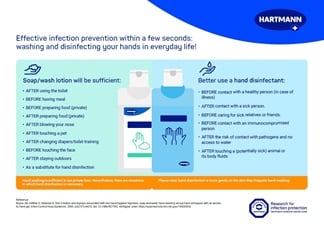
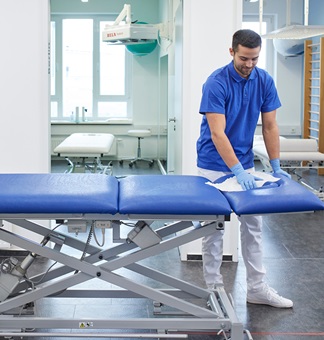
There is still room for improvement when it comes to hygiene in many medical facilities, even in Germany. Doctors' offices and hospitals offer favourable conditions for the spread of pathogens, with light switches, door handles, medical equipment and sanitary areas being particularly contaminated. In addition to these frequently touched surfaces, the hands of staff, patients and visitors are potential carriers of pathogens. Therefore, regular disinfection of surfaces, instruments and hands is essential in healthcare. To ensure that everyone knows what is important, surface hygiene (i.e., the cleaning and disinfection of surfaces) is regulated in official guidelines and internal hygiene plans, just like hand hygiene. Medical staff can use these guidelines as a reference and therefore always know how to behave. However, patients and visitors can also play an active role in maintaining good hand hygiene, particularly in the following situations [1,2]:
As a healthcare professional, you can influence patients' hand hygiene by informing, involving and encouraging them to disinfect their hands. At the same time, patients can also have positive impact on hand hygiene by maintaining an open dialogue with you and asking questions. By the way: dry skin is not a problem for hand disinfection. Regular use of hand disinfectants can even increase skin moisture [3].
Patient safety also affects the smallest patients worldwide: newborns. With the slogan ‘Patient safety from the start!’, the campaign day 2025 reminds us that babies and children need special protection in medical care.
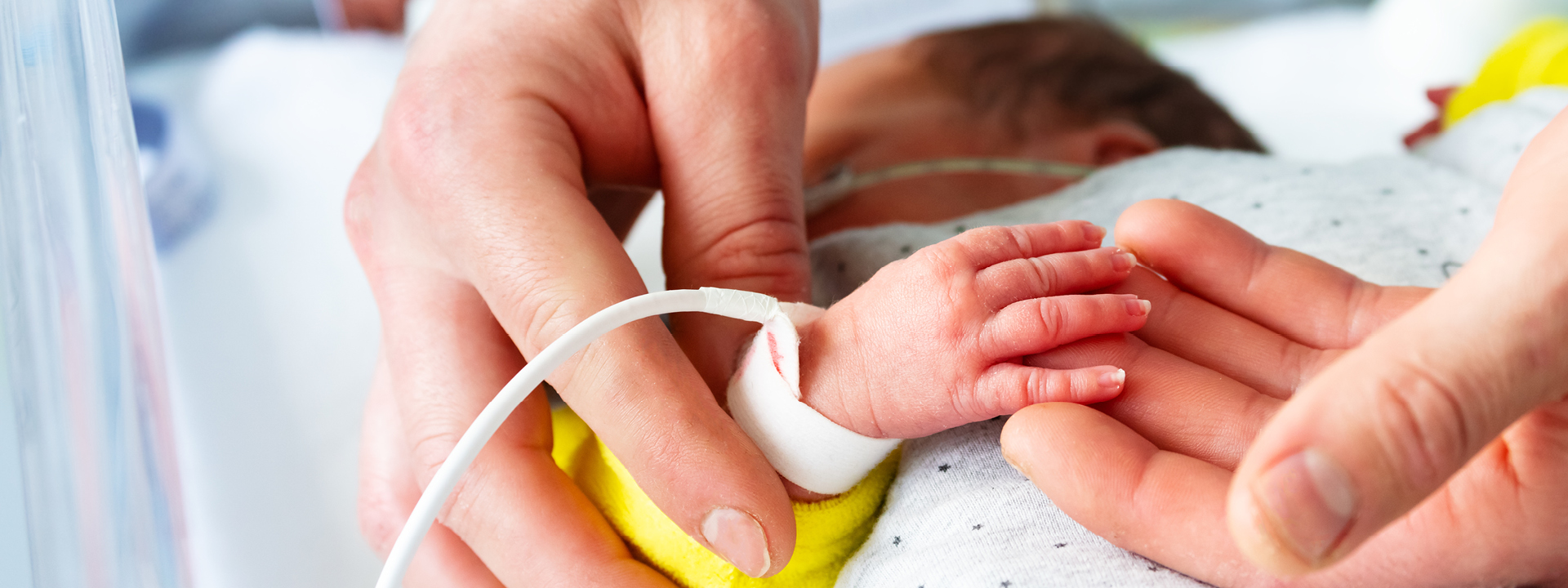
Newborn babies are generally - and also in hospital - particularly susceptible to infections. Their immune system is not yet fully developed and the body's own production of antibodies is still very low immediately after birth. In addition, the sensitive, thin skin of newborns and the insufficiently mature mucous membranes of the respiratory tract and intestines provide ideal entry points for potential pathogens.
Resistant germs, invasive measures and medical instruments can therefore also endanger the safety of newborns and premature babies [4]. For this reason, too, in order to ensure the safety of newborns, it is necessary that patients, visitors, and hospital staff comply with hygiene standards and observe basic hygiene rules.
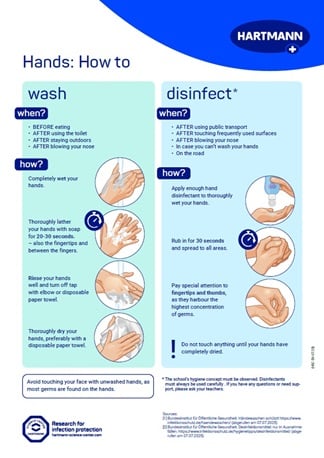
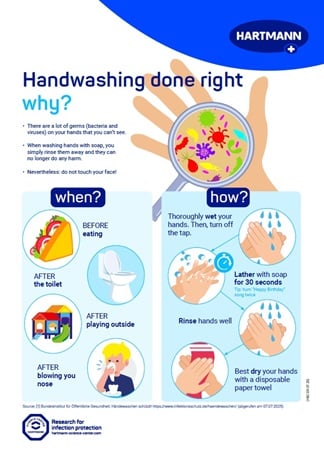
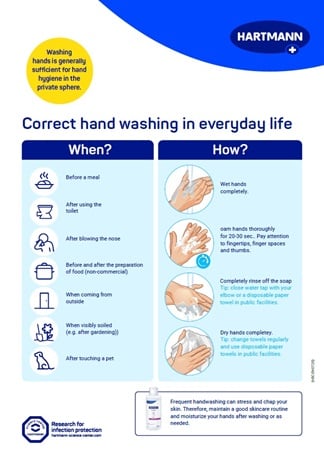
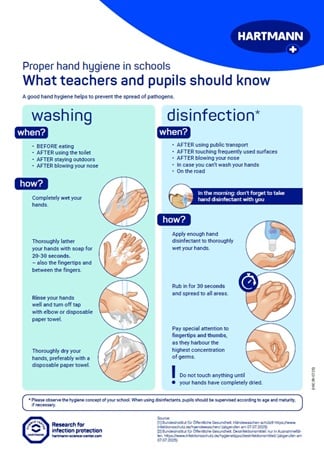
Hand hygiene plays a crucial role not only in medical facilities, but also in everyday life – this has become clear during the coronavirus pandemic. If teachers and pupils in schools are taught how to wash and disinfect their hands properly, many infection risks can be significantly reduced. Take part in this important educational work: share your knowledge and the information material with both teachers and school-age children – for better health in everyday school life.
Take part in this educational work - and share your knowledge and the information material with both teachers and school-age children!
The active involvement of patients is an integral part of patient safety. Patient empowerment, i.e. participation and education, helps immensely in recognising dangers early and avoiding errors in treatment and recovery.
Hand hygiene in medical health facilities is an active contribution to preventing infections - and therefore an essential part of patient information. At the same time, the awareness of patient safety exemplified by professionals is a crucial building block.
Protection against infection and patient safety are key issues in everyday medical practice and apply to everyone involved. As a healthcare professional, you can contribute to patient education: support your patients and serve as a role model how to properly perform hand hygiene. And as a patient, you can pass this knowledge on to your visitors.
As every year, numerous events and campaigns will take place on Patient Safety Day on 17 September. Be part of it and join us! WHO and APS are providing free materials for this!
You can also share your commitment and dedication to patient safety on social media using the hashtags #MissionInfectionPrevention and #PatientSafety.
Find out more about hand hygiene and surface hygiene, relevant products.
[1] WHO (2009) Guidelines on Hand Hygiene in Health Care
[2] KRINKO (2016) Händehygiene in Einrichtungen des Gesundheitswesens. Bundesgesundheitsbl. 59: 1189–1220
[3] Sadowski T et al. (2024) Visualisierung der Hautfeuchtigkeit nach häufiger Händedesinfektion mittels Capacitive Contact Imaging. SOWF Journal 150: 8-13.
[4] RKI-Bulletin 2013 | Hygienemaßnahmen auf neonatologischen Intensivstationen