Poster: Handwashing for Children and Teacher

(PDF | 147.56 KB)


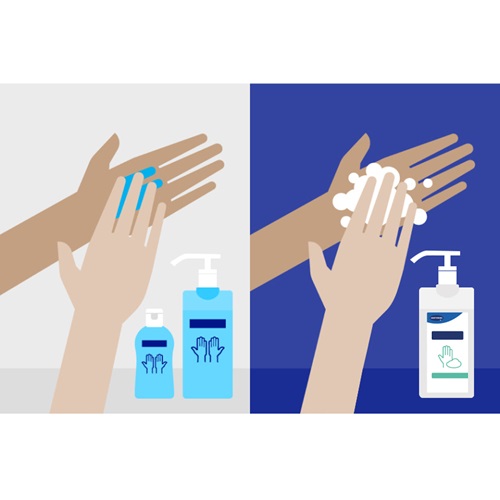
In everyday life, thorough hand washing with soap or wash lotion is sufficient for effective infection prevention in most situations. Generally, hands should always be washed before and after preparing food, before eating, after blowing your nose, after using the toilet, and before washing your face. Careful hand washing is also recommended after coming home or coming into contact with pets.
It is not only important to wash your hands, but also how you wash them: hands should be lathered thoroughly—paying particular attention to the fingertips, thumbs, and spaces between the fingers. Thorough washing should take around 30 seconds [2]. Furthermore, the temperature of the water is not a decisive factor in removing germs. Very hot water does not clean hands more effectively, but it can cause more severe skin irritation and damage [3]. Washing for longer or excessively can damage the skin, which is why additional skin care is essential [2].
Hand hygiene plays a crucial role not only for adults, but also in everyday life of children – this has become clear during the coronavirus pandemic. When teachers, pupils and kids – even those as young as preschoolers - learn how to wash their hands properly, many infection risks can be significantly reduced. Using child-friendly learning aids to teach hand-washing skills can lead to lasting improvements in hand-washing ability [4].
Take part in this important educational work: share your knowledge and the information material with both teachers and children – for better health in everyday life.
In private settings, hand washing is usually sufficient. In certain situations—such as when there are no washing facilities available, during cold season, or when in contact with people who are particularly susceptible to infection—the use of an alcohol-based hand disinfectant may be advisable [2]. Contrary to widespread belief, disinfection is gentler on the skin than frequent washing [5].
Therefore the HARTMANN SCIENCE CENTER has developed a poster that shows in which situations hand washing with soap or wash lotion is advisable to prevent infections – and when it is better to use a hand disinfectant.
Originally designed to meet the demanding hygiene standards of healthcare professionals, Sterillium® pure offers reliable protection wherever hand hygiene matters. Thanks to its broad approvals, excellent skin compatibility and fragrance- and colorant-free formulation, it is suitable not only for hospitals and nursing homes, but also for schools, daycare centers and other everyday settings. Furthermore, the product can be used by children under supervision to help ensure safe hand hygiene in everyday life.
One solution, trusted across all environments where effective and skin-sensitive hand disinfection is essential.
.png?h=567&iar=0&mw=540&w=540&rev=6fdd775e8b6c4a7da6a145324b1618aa&sc_lang=en&hash=DBD96A9CF9F33EA6152C2AEE0DBFB533)
Healthy skin is essential for successful hand hygiene. The formulation of cleaning products has a major impact on skin compatibility. A skin-neutral pH value, mild surfactants, and natural care ingredients can reduce the negative effects of frequent washing. Proper skin care should also not be forgotten. This is especially true for people working in healthcare professions. Healthcare professionals cite skin irritation as the most common reason for not following hand disinfection procedures. 85% of nursing staff report temporary skin damage to their hands [6]. Regular use of skin care or skin protection products tailored to the needs of the user prevents skin irritation and improves the condition of the skin.
Help prevent infections and protect yourself and others from harmful germs! Join the global movement and become a Handwashing Hero by practicing good hand hygiene every day, not just on October 15!
#CleanHands #MissionInfectionPrevention
Our products:
For hand cleansing: Hand Cleansing
For hand protection and care: Hand Protection and Care
For hand disinfection: Hand Disinfection
Global Handwashing Partnership. Global Handwashing Day - Be a Handwashing Hero. Available at: https://globalhandwashing.org/global-handwashing-day/ (accessed July 2026)
Bundesinstitut für Öffentliche Gesundheit. Händewaschen schützt! https://www.infektionsschutz.de/haendewaschen/ (abgerufen am 11.08.2026)
WHO Guidelines on Hand Hygiene in Health Care: First Global Patient Safety Challenge Clean Care Is Safer Care. Geneva: World Health Organization; 2009. 11, Review of preparations used for hand hygiene. Available of: https://www.ncbi.nlm.nih.gov/books/NBK144041/?utm_source=chatgpt.com
Khan S, et al. Impact of hand hygiene intervention on hand washing ability of school-aged children. J Family Med Prim Care. 2021 Feb;10(2):642-647.
Chamorey E, et al. A prospective multicenter study evaluating skin tolerance to standard hand hygiene techniques. American Journal of Infection Control, 2010; 39, 6-13.
McGuckin M, Govednik J. Irritant Contact Dermatitis on Hands. Am J Med Qual 2017; 32 (1): 93–99.
Use biocides safely. Always read the label and product information before use.


