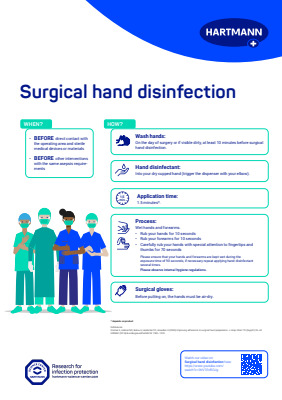
Poster bare below the elbow

Learn more


International Nurses Day (IND) is celebrated worldwide on May 12th to mark the birthday of Florence Nightingale, the pioneer of modern nursing [1]. We at HARTMANN are participating to help recognize the work of nurses and raise awareness of their crucial role in healthcare. The IND, which in 2026 will be held under the motto “Our Nurses. Our Future. Empowered Nurses Save Lives,” is organized annually by the International Council of Nurses (ICN).
Since Florence Nightingale established the world's first nursing school in 1860, the profession of nursing has undergone a fundamental transformation. While working with wounded soldiers, she observed that more people died from wound infections than from their original injuries. The hygiene measures she introduced, such as regular handwashing and consistent room ventilation, seem obvious today, but they were revolutionary at the time and saved countless lives [2]. Today, nursing is an increasingly academic profession, with dedicated degree programmes and professional associations such as the International Council of Nurses (ICN). However, demographic change is presenting growing challenges: rising demand is meeting a shortage of skilled workers, and working conditions are becoming increasingly demanding [3]. Therefore, improving working conditions and raising the profile of the profession is urgently needed.
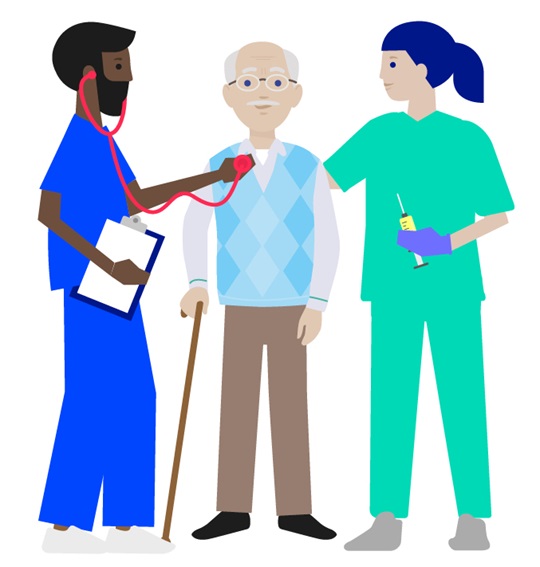
Hygiene is still essential to prevent healthcare-associated infections (HAIs). Today, hand hygiene goes far beyond the handwashing practices advocated by Nightingale. Many HAIs can be prevented by correctly disinfecting your hands at the right time. A questionnaire-based study also indicates that healthcare workers require considerable additional working time due to HAIs [4]. Therefore, consistent hand hygiene contributes not only to patient safety, but also ultimately reduces nurses’ workload by preventing avoidable extra work caused by outbreaks.
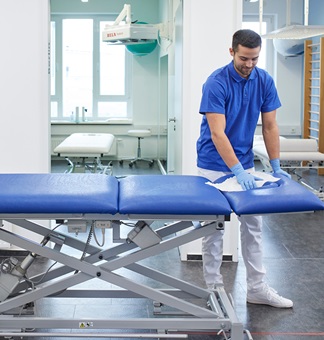
However, not only hands, but also nursing workwear can become an infection risk in healthcare facilities. According to a US study, about one-third of nursing workwear is contaminated with pathogenic germs, especially if they have previously bathed patients or treated their wounds [5].
To improve the knowledge of healthcare and nursing staff in care homes, it is crucial to implement innovative, continuous training programmes on infection prevention and control. These programmes should cover not only hand hygiene, but also surface hygiene. Even short training sessions with follow-up can significantly improve hand hygiene compliance (HHC) among healthcare workers [6]. A long-term study also demonstrated that regular repetition of training and feedback can further improve HHC, even among staff with high baseline scores: among nursing staff, HHC increased from 86% to over 96% over five years [7].
Furthermore, a survey to derive improvement strategies showed that adherent nurses implement their HHC predominantly out of inner conviction and are particularly guided by personal goals such as protecting themselves and others [8].
On the learning platform HARTMANN ACADEMY, you will find numerous training courses specifically aimed at professionals in care facilities.
One thing is certain: Nurses are a vital pillar of our society. In the face of mounting challenges due to demographic change, nurses require more than mere words; they deserve better working conditions, fair pay and genuine appreciation. Join us in advocating for nurses and share your message using the hashtags #IND2026 and #OurNursesFuture.
Sources: