Surface Disinfection
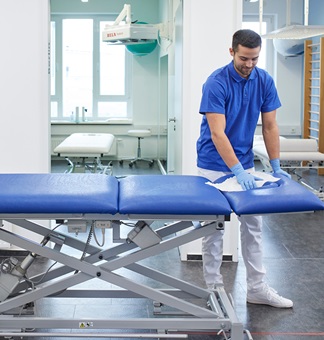
Surface disinfection is crucial in healthcare settings to limit pathogen transmission. Learn about the importance of correct dosage, wetting, and exposure times, as well as the right choice of disinfectant.
Learn more

Spectrum of activity:
Transmission route:
Hygiene measures:
The incubation period for hand, foot and mouth disease caused by Coxsackie viruses is usually three to ten days after exposure. Initially, non-specific symptoms such as fever, a sore throat, loss of appetite, a general feeling of being unwell and tiredness often occur [4].
One to two days after the onset of fever, painful lesions or blisters may develop on the oral mucosa, particularly on the tongue, gums and the insides of the cheeks. Shortly afterwards, a characteristic rash typically develops on the palms of the hands and soles of the feet. This may also spread to the buttocks, knees, elbows or genital area. The skin lesions usually appear as red patches, papules or small blisters [3,4].
More than 80% of infections are asymptomatic or cause only mild symptoms. Most affected individuals make a full recovery within five to ten days without specific treatment [3, 4].
In rare cases, serious complications may occur. These are most commonly associated with enterovirus A71 and include aseptic meningitis, encephalitis, acute flaccid paralysis and other neurological manifestations. Severe cases may require hospitalisation and intensive care [5, 6].
Infected individuals are most contagious during the first week of illness. However, the virus can still be shed in the stools for several weeks after symptoms have subsided, meaning transmission remains possible even after apparent recovery [2, 4].
Humans are the only known reservoir for the viruses that cause hand, foot and mouth disease. Transmission occurs mainly through direct contact with saliva, nasal secretions, respiratory droplets, the contents of blisters, and contaminated surfaces or objects. Toys, door handles, changing tables and other frequently touched objects can contribute to the spread of the disease, particularly in childcare centres. Transmission via contaminated hands plays a significant role in this. The pathogen can also be transmitted via the stools of infected individuals (faecal-oral) [1, 2, 4].
Since many infections are asymptomatic, transmission can occur unnoticed within families, schools and healthcare settings [2, 4].
Coxsackie virus infections occur worldwide and are among the most common viral infections in childhood. Hand, foot and mouth disease is endemic in many countries and regularly causes seasonal outbreaks. In temperate climates, infections tend to be particularly prevalent in late summer and autumn, though they can occur at any time of year [1].
Children under the age of five are the most commonly affected age group. However, during outbreaks, older children and adults may also fall ill. Community outbreaks are particularly common in nurseries, childcare centres and schools [1, 3].
Large outbreaks have been reported repeatedly in the Western Pacific Region and parts of Asia, over the past few decades. Some outbreaks involving enterovirus A71 have been associated with increased rates of neurological complications and severe illness [5].
Effective prevention relies primarily on consistent hygiene measures. Regular handwashing with soap and water is particularly important after using the toilet, after changing nappies, after handling potentially contaminated materials, and before preparing food [1, 3, 4].
Frequently touched surfaces, shared objects, toys and sanitary facilities should be cleaned and disinfected regularly, particularly in childcare centres and healthcare settings where transmission can occur easily [3].
During the acute phase of the illness, close contact with infected individuals should be avoided where possible. Good respiratory hygiene, including covering the mouth and nose when coughing or sneezing, can also help to reduce transmission [3, 4].
There is currently no widely used vaccine available in Europe and North America against Coxsackie viruses, which cause hand, foot and mouth disease. Several vaccines against EV-A71 are available in the Western Pacific region [1, 3].
As Coxsackie viruses are non-enveloped viruses, they are more resistant to many disinfectants than enveloped viruses. Products with proven virucidal efficacy should therefore be used for hand and surface disinfection [1].
Use PPE in a targeted and situational manner. Depending on the risk of contamination, gloves, protective gowns, face masks or safety goggles may be required, regardless of the pathogen.
Examples: Contact with blood, secretions/excretions, extensive wound care
Use disposable med. gloves and protective gowns. Depending on the pathogen and clinical picture, protective goggles and a face mask may also be required.
Examples: MRSA, Clostridioides difficile
Use disposable med. gloves, protective gowns and face mask. Depending on the pathogen and clinical picture, protective goggles may also be required.
Example: Whooping cough
Use disposable med. gloves, protective gown, respirator (e. g. FFP-2). Depending on the pathogen and clinical picture, protective goggles may be required.
Examples: Overt tuberculosis of the respiratory tract, measles
Generally use of blower protection suits.
Examples: Ebola, Marburg virus
A concise overview of all relevant pathogens: Use the dynamic search feature for targeted infection prevention in your work area.


